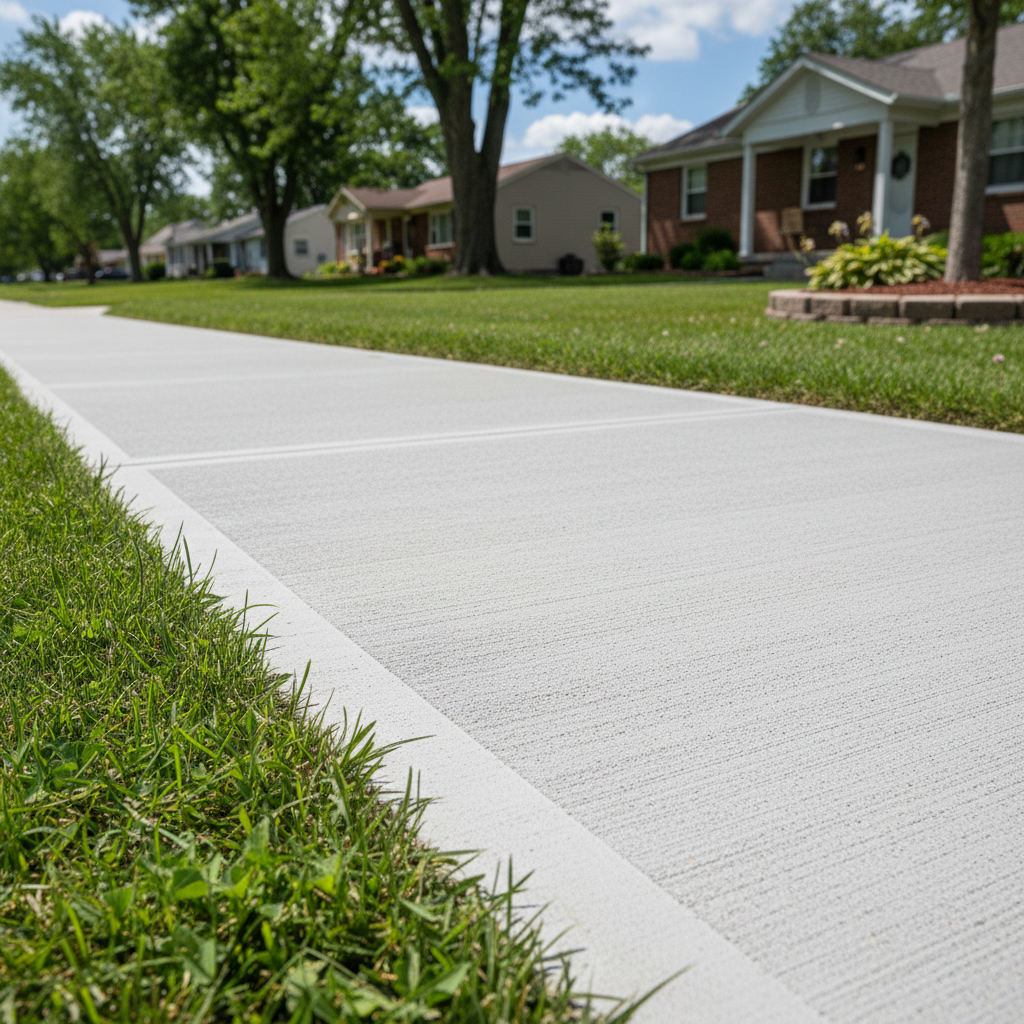
Do I even need a permit to put in a new sidewalk or replace an old one?
This is one of the first things folks ask us, and it's a good question because the answer isn't always a simple yes or no. If you're just doing a small repair, like patching a crack or fixing a single sunken slab on your own property, usually you won't need a permit. But if you're replacing a whole section of sidewalk, especially if it's along a public right-of-way, or putting in a brand new one that connects to the city's system? Then yeah, you'll likely need a permit from the City of Muncie Building Commissioner's office. They want to make sure it meets their specs for public safety and drainage, which makes sense. It's always best to check with them directly before you start digging, just to be safe. You really don't want to get halfway through a job and have to stop because you missed a step, believe me.
How thick should my concrete sidewalk be?
For a standard residential sidewalk that's just going to see foot traffic, 4 inches is generally the minimum thickness we recommend and pour. That's plenty strong for people, bikes, and even a lawnmower. Now, if you're thinking about something that might occasionally have a vehicle drive over it – say, a path that doubles as access to a backyard shed or a spot where you might park a small trailer – then you're going to want to bump that up to 5 or even 6 inches. For those heavier-duty applications, we'd also beef up the rebar or wire mesh inside. It's all about matching the thickness to the expected load, and you don't want to skimp here because a thin sidewalk will crack and break down a lot faster, especially with our Muncie freeze-thaw cycles.
What's the deal with expansion joints and control joints? Are they really necessary?
Absolutely, they're necessary. Think of them as the concrete's way of breathing, if you will. Concrete expands and contracts with temperature changes. Without these joints, that movement creates stress, and eventually, that stress leads to uncontrolled, ugly cracks. Expansion joints are usually thicker, full-depth breaks that go all the way through the slab, often filled with a compressible material like asphalt or fiberboard. You'll see these where a sidewalk meets a driveway, a house foundation, or another fixed structure. They allow for significant movement. Control joints, on the other hand, are saw-cut or grooved lines that are typically about a quarter of the slab's depth. Their job is to create a weakened plane so that if the concrete *does* crack due to shrinkage or minor movement, it cracks neatly along that line, where you want it to, instead of randomly across the surface. We plan these out carefully at Midway Concrete Co. to make sure your sidewalk stays looking good and performs well for years.
How long until I can walk on my new sidewalk?
Patience is key with concrete, but you won't be waiting forever. Generally, you can walk on a new concrete sidewalk after about 24 to 48 hours. That's when it's gained enough strength to support light foot traffic without getting damaged. But don't go throwing a block party on it just yet. It takes about 7 days for concrete to reach around 70% of its full strength, and it continues to cure and harden for up to 28 days. So, if you can, try to keep heavy items or vehicles off it for at least a week, and ideally, let it get close to that 28-day mark before putting it through any serious paces. The longer you let it cure undisturbed, the stronger and more durable it'll be in the long run.
What causes sidewalks to crack and heave in Muncie?
There are a few usual suspects when it comes to cracked and heaving sidewalks around here. First, our lovely Indiana weather is a big one. Those constant freeze-thaw cycles we get every winter are brutal. Water seeps into tiny cracks, freezes, expands, and pushes the concrete apart. Then it thaws, and the process repeats, slowly but surely destroying the slab. Poor drainage is another major culprit; if water sits under the concrete, it can soften the subgrade, leading to settlement and cracking. Tree roots are also notorious for causing problems, especially with older sidewalks in areas like the Old West End where you've got mature trees. As roots grow, they push up the slabs from underneath. Finally, a poorly prepared base or insufficient thickness, as we talked about, will definitely lead to premature cracking. We always make sure the subgrade is properly compacted and graded before we even think about pouring.
Should I seal my concrete sidewalk?
You bet you should. Sealing your concrete sidewalk is like putting a protective coat on it, and it's one of the best things you can do to extend its life, especially here in Muncie. A good quality penetrating sealer helps protect against moisture absorption, which directly combats those freeze-thaw cycles I just mentioned. It also guards against stains from oil, dirt, and even de-icing salts, which can be really harsh on concrete. I usually recommend sealing a new sidewalk about 28 days after it's poured, once it's fully cured. After that, plan on resealing every 2-3 years, depending on the sealer type and how much abuse it takes. It's a small investment that pays off big time in preventing costly repairs down the road.
What's the best way to clean my concrete sidewalk?
Keeping your sidewalk clean isn't just about looks; it helps with longevity too. For everyday dirt and grime, a stiff broom and a hose with some good water pressure usually do the trick. If you've got tougher stains like oil or mildew, you might need a little more muscle. For oil, try a degreaser specifically made for concrete, let it sit, then scrub and rinse. For mildew or algae, a mix of mild detergent and water, or even a specialized concrete cleaner, works well. A pressure washer can be a great tool for a deep clean, but be careful with the pressure setting. Too high, and you can actually damage the surface of the concrete, especially if it's older or not sealed. Start with a lower setting and a wide fan tip, and keep the nozzle moving. Regular cleaning prevents buildup that can trap moisture and accelerate deterioration.