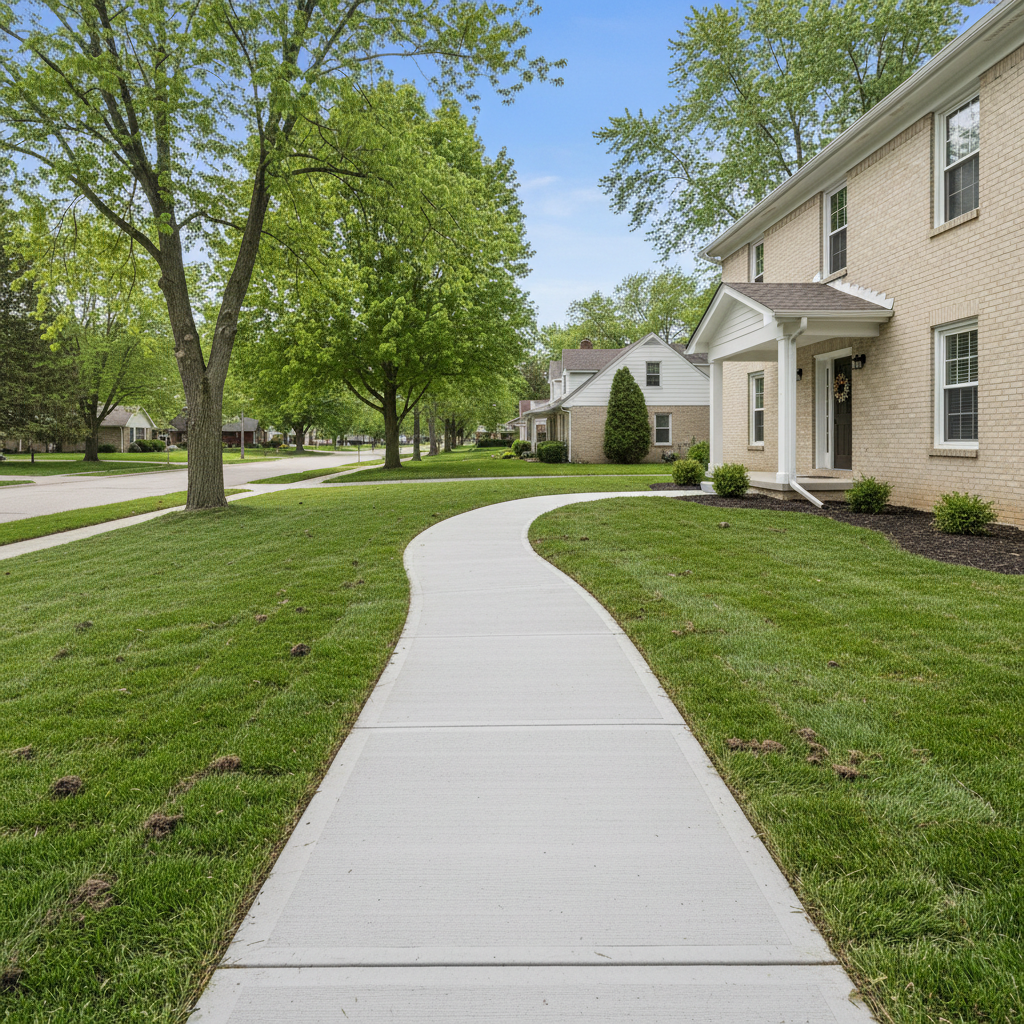
You're thinking about a new concrete sidewalk, maybe replacing an old cracked one, or finally putting in that path to your backyard patio. That's a great idea; a good sidewalk really boosts curb appeal and makes your property safer. But I've seen enough Muncie homeowners make preventable mistakes that end up costing them more money, time, and headaches down the road. Let's talk about what to watch out for so you don't end up regretting your decision.
Mistake #1: Focusing Only on the Lowest Bid
Look, I get it. Money doesn't grow on trees, especially not here in Muncie. Everyone wants a good deal. But when it comes to concrete, the absolute cheapest bid is almost never the best one. I'm not saying you need to break the bank, but there's a reason some bids are significantly lower than others. Sometimes it's because they're cutting corners on materials, like using a lower strength concrete mix that won't stand up to our Indiana winters and freeze-thaw cycles. Other times, they're skipping crucial prep work, like proper grading and base compaction.
A proper concrete sidewalk isn't just about pouring gray stuff on the ground. It's about what's underneath it. If the base isn't solid, level, and well-drained, that concrete is going to crack and shift, sometimes in just a year or two. And then you're paying to tear it out and do it all over again. Ask for detailed quotes. What kind of concrete mix are they using? What's their process for subgrade preparation? If they can't answer those questions clearly, or if their answer is just, "We pour concrete," that's a red flag.
Mistake #2: Not Understanding Drainage Requirements
This is a big one, especially with the amount of rain we get around here. A new sidewalk needs to be designed and installed with proper drainage in mind. You don't want water pooling on it, or worse, running towards your house foundation or your neighbor's property. I've seen folks get a new sidewalk only to find their basement starts getting damp because the water flow was redirected poorly. Or they end up with icy patches in winter that are a real hazard.
Your contractor should be looking at the existing grade, how water currently flows, and planning for a slight slope (usually about 1/4 inch per foot) away from any structures. They should also consider whether additional drainage solutions, like a French drain or a channel drain, might be necessary in certain spots. Don't assume they'll just handle it; ask them specifically how they plan to manage water runoff from your new sidewalk. A good contractor, like us at Midway Concrete Co, will always bring this up proactively.
Mistake #3: Ignoring Expansion Joints and Control Joints
Concrete expands and contracts with temperature changes. It's just what it does. If you don't give it room to move, it's going to crack randomly. That's where expansion joints and control joints come in. Expansion joints go all the way through the slab and are typically used where the sidewalk meets a house, driveway, or another fixed structure. They prevent the concrete from pushing against these structures and causing damage.
Control joints (also called score marks) are cuts made into the concrete that create weakened planes. The idea is that if the concrete is going to crack due to shrinkage or temperature changes, it will crack along these lines, keeping the cracks neat and predictable instead of ugly, random fissures. I've seen too many DIY jobs or inexperienced contractors skip these, and within a year or two, the sidewalk looks like a spiderweb. Make sure your contractor has a clear plan for where these joints will be placed.
Mistake #4: Not Checking for Permits or Utility Lines
Before any digging starts, you or your contractor needs to call 811 to get utility lines marked. Seriously, don't skip this. Hitting a gas line, water pipe, or electrical conduit isn't just a hassle; it's dangerous and expensive. It's a simple, free call that can prevent a major disaster.
Also, depending on where your sidewalk is going and how close it is to the street or property lines, you might need a permit from the city of Muncie. This is especially true if you're working on a public right-of-way. A reputable contractor will know these requirements and handle the permit process for you. If they tell you, "we don't need no stinkin' permits," that's a huge red flag that they might not be following other important regulations either.
Mistake #5: Not Getting Everything in Writing
This might seem obvious, but it's surprising how often folks rely on a handshake and a verbal agreement. Get a detailed contract. It should include: the scope of work (what exactly are they doing?), the materials being used (concrete strength, rebar/mesh if applicable), the timeline, the total cost, and a payment schedule. It should also specify cleanup and disposal of old concrete.
Also, make sure they're insured and licensed. Ask for proof. If a worker gets hurt on your property and they're not insured, you could be liable. It's just not worth the risk. A professional contractor won't hesitate to provide this information.
A new concrete sidewalk is a solid investment in your home. By avoiding these common mistakes, you'll ensure that investment lasts for years and adds real value to your property without any unexpected surprises.