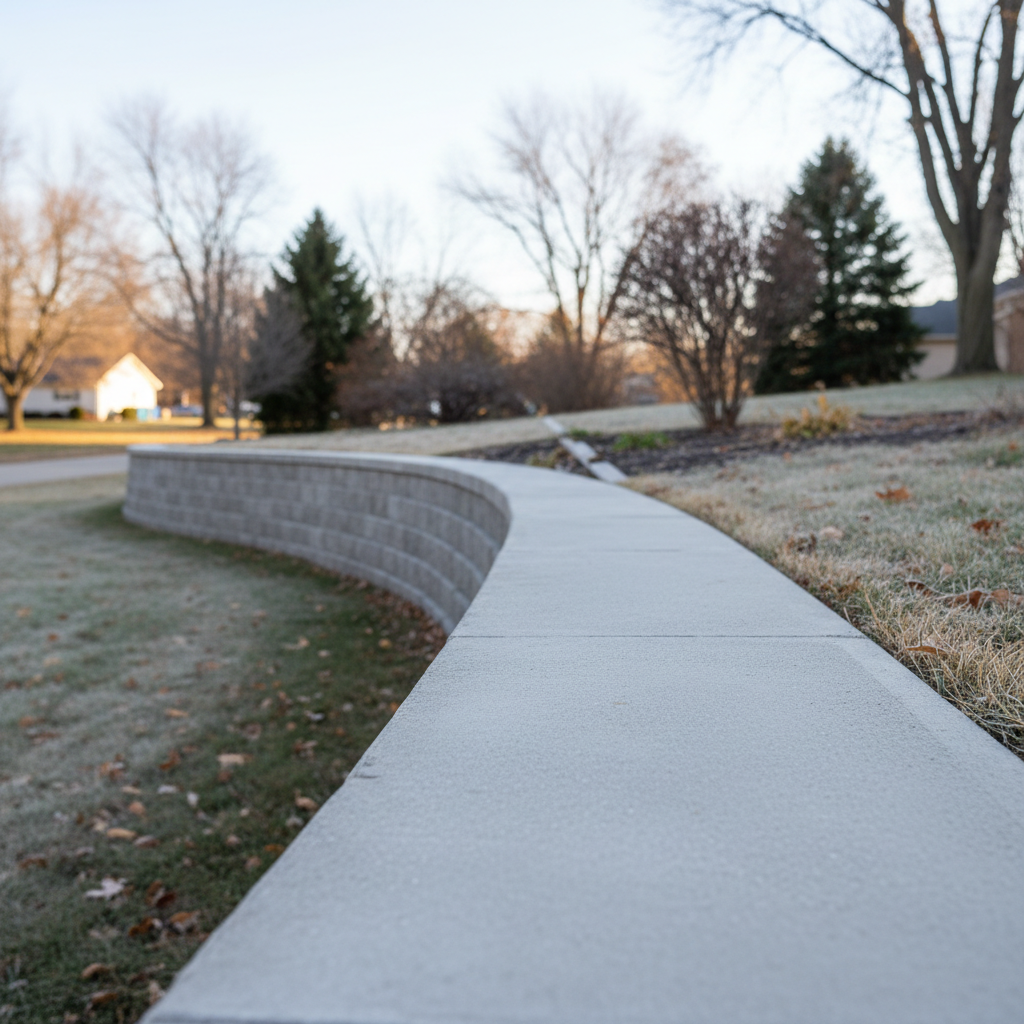
Do I even need a retaining wall? What's the point?
That's a fair question, and it's one I get a lot, especially from folks in older Muncie neighborhoods like those around Minnetrista, where the lots can be a bit sloped. Simply put, a retaining wall holds back soil. If you've got a sloped yard that's eroding, or if you want to create a flat, usable space on a hill, you need a retaining wall. It prevents soil from washing away, stops land from sliding, and can turn an unusable slope into a beautiful, terraced garden or a level patio area. It's not just about looks; it's about stability and making your property work for you.
What's the difference between concrete block and poured concrete walls?
Good question, because they're both concrete, but they're built differently and have different strengths. Concrete block walls, often called segmental retaining walls (SRWs), are made from pre-manufactured concrete blocks that interlock. They're usually dry-stacked, meaning no mortar, and rely on their weight and the interlocking system for stability. They're pretty versatile for curves and can be a good option for shorter walls or decorative features. Poured concrete walls, on the other hand, are built by setting up forms and pouring wet concrete directly into them. Once it cures, you've got a monolithic, solid structure. These are generally stronger, more durable, and can handle much greater loads and heights. For serious earth retention, especially anything over four feet, I'm almost always recommending poured concrete. It's just a more robust solution for our Indiana freeze-thaw cycles.
How much does a concrete retaining wall cost?
Alright, let's talk brass tacks. This is probably the number one question everyone asks, and it's tough to give a one-size-fits-all answer because there are so many variables. Generally, you're looking at anywhere from $30 to $80 per square foot, and sometimes more for complex jobs. What drives the price? Well, the height and length of the wall are obvious factors. The type of concrete – block versus poured – makes a big difference. Poured concrete is usually more expensive upfront due to the labor for forming, but it often lasts longer. Then there's the site prep: how much excavation is needed? Is the soil stable? Do we need to bring in fill dirt or haul away a lot of existing material? Access to the site is huge too; if we can't get equipment in easily, that adds to labor costs. And don't forget drainage; a good drainage system behind the wall is critical, and that's an added cost, but one you absolutely can't skip. I always tell folks, don't just look at the lowest bid; look at what's included and the contractor's reputation. At Midway Concrete Co, we make sure you understand every line item.
Do I need a permit for a retaining wall in Muncie?
You bet you do, for most of 'em. In Muncie, if your retaining wall is going to be over four feet tall, measured from the bottom of the footing to the top of the wall, you'll almost certainly need a building permit from the city. Even for shorter walls, if they're supporting a significant load or are close to property lines or structures, it's always best to check with the Muncie Building Commissioner's office. They'll want to see plans, and sometimes even engineering drawings, especially for taller walls. Skipping the permit can lead to fines, having to tear it down, or problems when you try to sell your house down the road. It's not worth the headache, trust me.
What about drainage? Is it really that important?
Crucial. Absolutely, unequivocally crucial. If you build a retaining wall without proper drainage, you're just building a dam, and that water pressure will eventually destroy your wall. Water builds up behind the wall, freezes, expands, and pushes the wall over. It's not a matter of if, but when. We always install a perforated drain pipe (often called a 'French drain') along the base of the wall, behind the concrete, wrapped in a filter fabric, and surrounded by gravel. This collects the water and directs it away from the wall, usually to an open area or a storm drain. We also put weep holes in the wall itself to allow any trapped water to escape. Don't let anyone tell you drainage isn't necessary; it's the lifeblood of a long-lasting retaining wall.
How long will a concrete retaining wall last?
A properly designed and built concrete retaining wall, especially a poured one, can last a lifetime – 50 to 100 years, easy. We're talking generations. The key is that