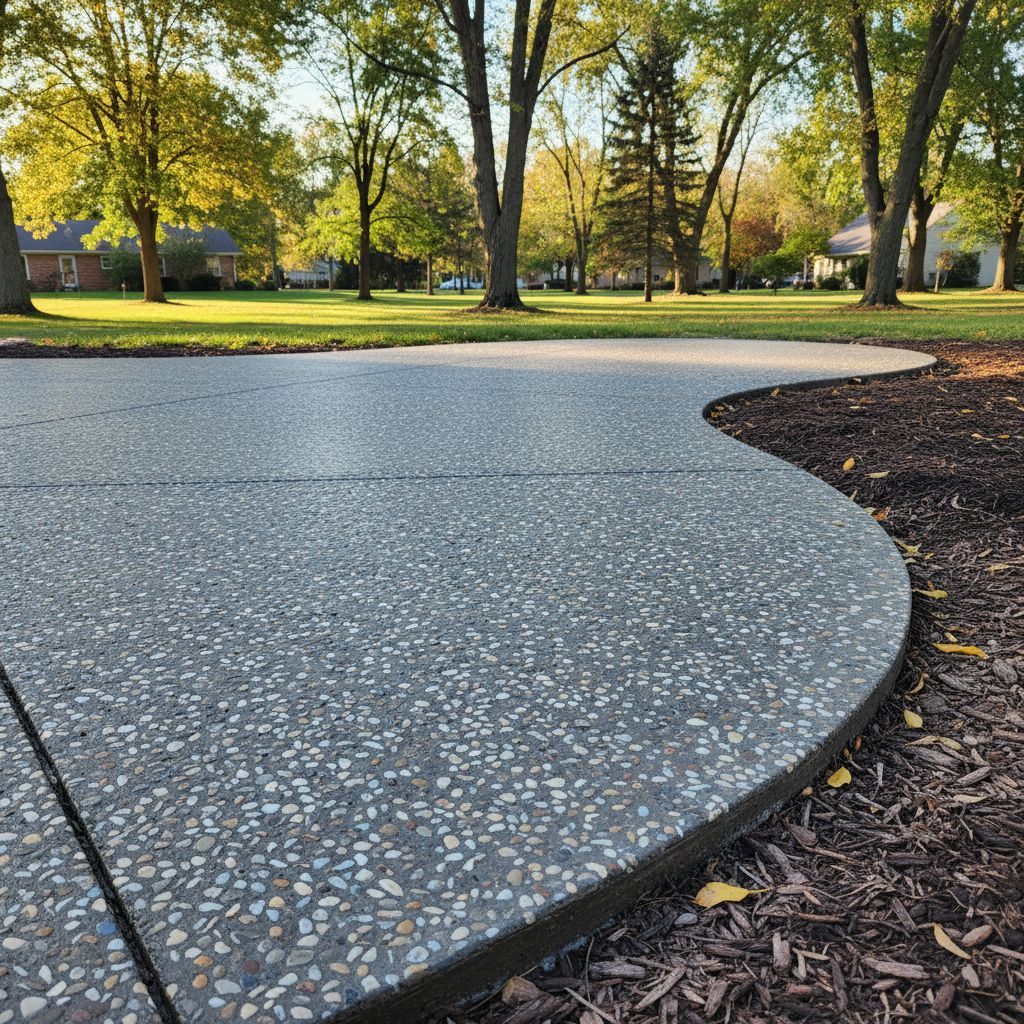
You're probably here because you've seen some really cool concrete work around Muncie – maybe a patio that looks like stone, a driveway with a unique pattern, or a floor inside that's got some serious character. That's decorative concrete, and it's come a long way from just plain gray. Folks around here ask me a lot of questions about it, so I figured I'd put together some straight answers for you.
What exactly IS decorative concrete?
Alright, let's get this straight. Decorative concrete isn't just one thing. It's an umbrella term for concrete that's been treated or altered to look like something else, or just to have a more appealing finish than your standard broom-finished slab. The main types you'll hear about are:
- Stamped Concrete: This is where we press patterns into freshly poured concrete to mimic the look of natural stone, brick, wood, or even tile. We use big, flexible mats that have these textures molded into them.
- Stained Concrete: This involves applying acid-based or water-based stains to existing or new concrete. Acid stains react with the concrete's minerals to create translucent, variegated effects, kind of like natural stone. Water-based stains offer more uniform color and a wider palette.
- Exposed Aggregate: This one's pretty simple but looks great. We pour the concrete, let it set a bit, then wash away the top layer of cement paste to expose the small, colorful stones (aggregate) within the mix. It gives a really natural, textured look.
- Polished Concrete: Think of this like sanding wood, but for concrete. We use special grinding machines with progressively finer grits to smooth the surface until it shines. You can get a matte finish or a high-gloss mirror shine.
Each one has its own look and feel, and its own set of pros and cons.
Is decorative concrete more expensive than regular concrete?
Short answer? Yeah, usually. It's not just the concrete mix itself; you're paying for the specialized materials, the extra labor, and the skill it takes to get it right. Stamped concrete, for example, requires specific release agents, color hardeners, and those expensive stamping mats. Plus, it's a more time-sensitive process. If you mess up the timing, you mess up the whole job. Staining also involves prep work, application, and sealing. Exposed aggregate is a bit less involved than stamping, but still more than a basic pour.
You're investing in aesthetics and durability. Think of it like this: a plain concrete patio is like a basic Ford F-150. A stamped patio that looks like flagstone is more like an F-150 with all the bells and whistles, maybe even a custom paint job. Both get the job done, but one looks a lot nicer doing it.
How long does decorative concrete last, especially with our Muncie weather?
This is a big one, especially with our crazy Indiana weather – those freeze-thaw cycles can be brutal on anything outside. When done right, decorative concrete can last just as long, if not longer, than regular concrete. We're talking decades, easily 20-30 years or more, especially if it's properly installed and maintained.
The key is proper installation: good sub-base prep, the right concrete mix with a low water-to-cement ratio, proper curing, and most importantly for decorative work, a good quality sealer. That sealer is your concrete's best friend against moisture, UV rays, and those temperature swings. I always tell folks in neighborhoods like Westwood or Minnetrista, where you've got some older homes and mature trees, that keeping up with sealing is crucial to protect against both the elements and any organic growth.
Does it require special maintenance?
Not really