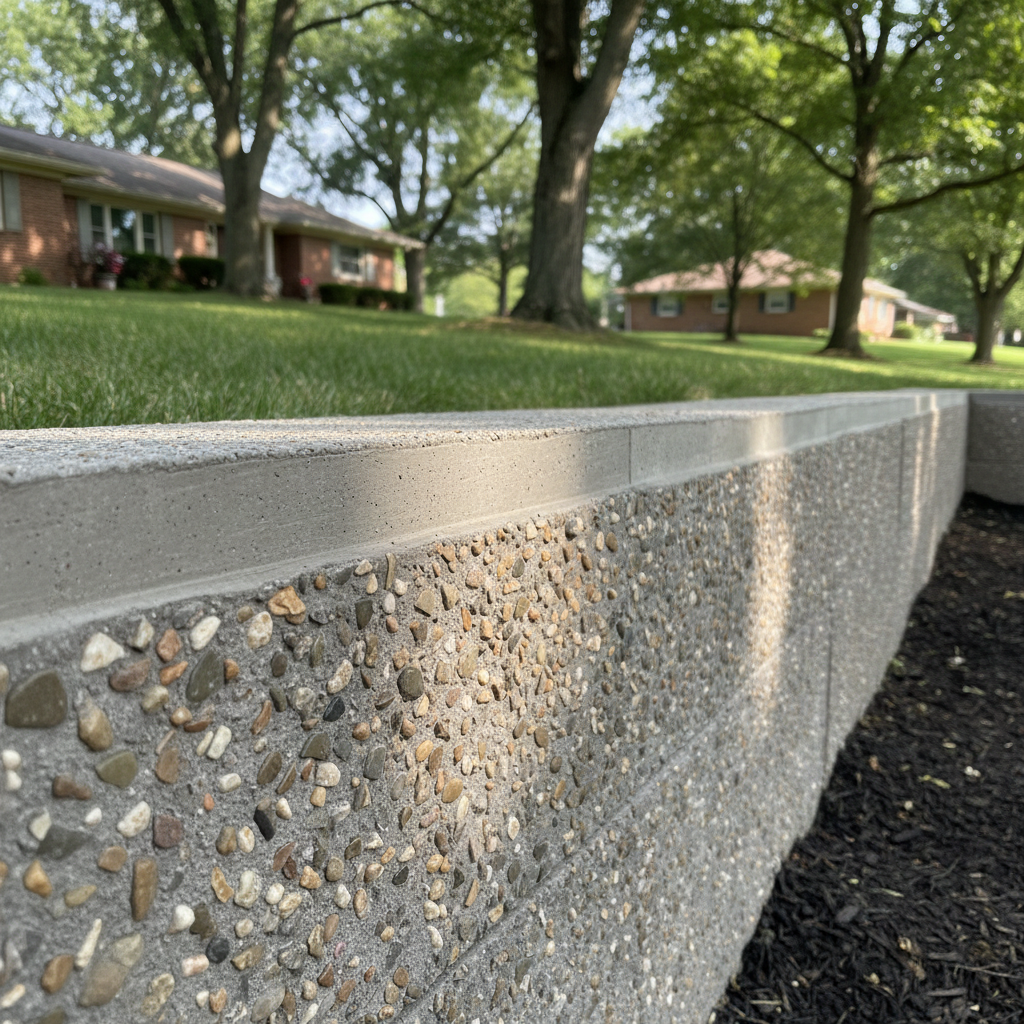
Why do I even need a retaining wall?
That's usually the first thing people ask me, especially if they've got a sloped yard they've just been mowing around for years. Simply put, a retaining wall holds back soil. If you've got a hillside that's eroding, or you want to create a flat, usable space on a sloped lot, a retaining wall is your answer. It prevents soil from washing away, stops landslides, and can even help manage water runoff. Plus, it can look really good, adding structure and curb appeal to your property. I've seen plenty of yards in areas like the Old West End where a well-placed wall completely transforms the space, making it much more functional and attractive.
What kind of concrete retaining walls are there?
When most folks think concrete, they picture those big, grey, blocky things. And yeah, those are definitely an option – segmental retaining walls, we call 'em. They're built from interlocking concrete blocks, and they're super popular because they're durable and pretty versatile. But you've also got poured concrete walls, which are exactly what they sound like: concrete poured into forms on-site. These are incredibly strong and can be customized with different finishes, textures, and even colors. Then there are precast concrete walls, which are manufactured off-site and then brought in and installed. Each type has its pros and cons depending on the size of the wall, the soil conditions, and your budget. We'll talk through all that when I come out for an estimate.
How much does a concrete retaining wall cost?
This is the big one, right? And honestly, it's tough to give a number without seeing your specific situation. There are so many variables. The biggest factors are the height and length of the wall, the type of concrete system you choose (segmental blocks are generally less expensive than poured concrete, for example), and the site access. If we need to bring in heavy machinery and there's not much room, that's going to add to the labor cost. Soil conditions play a huge role too; if we hit a bunch of rock or really soft, unstable soil, that requires more prep work. Drainage systems, permits, and any special finishes also factor in. What I can tell you is that a quality concrete retaining wall is an investment that protects your property and adds value, and it's built to last for decades if done right. We'll give you a clear, itemized quote at Midway Concrete Co. so you know exactly what you're paying for.
Do I need a permit to build a retaining wall in Muncie?
Short answer: probably. Most cities, including Muncie, require permits for retaining walls, especially if they're over a certain height – usually around 3 or 4 feet. This isn't just bureaucracy; it's about making sure the wall is designed and built safely. A poorly constructed retaining wall can be a serious hazard. The permitting process usually involves submitting plans, and sometimes an engineer's stamp is required, particularly for taller or more complex walls. Don't skip this step. It's not worth the headache, or the potential danger, down the road. We can help you understand the local requirements and navigate the permit application process.
What about drainage? Is that important?
Absolutely, it's critical. If you don't have proper drainage behind a retaining wall, you're just asking for trouble. Water builds up pressure, and that pressure can eventually push the wall over, crack it, or cause it to lean. We always install a drainage system behind our retaining walls. This usually involves a layer of gravel right behind the wall, a perforated drain pipe at the base, and sometimes weep holes in the wall itself. This setup collects the water and directs it away from the wall's foundation, relieving that hydrostatic pressure. Around here, with our Indiana winters and spring thaws, you can't afford to ignore drainage. It's non-negotiable for a wall that's going to stand the test of time.
How long does a concrete retaining wall last?
A properly designed and installed concrete retaining wall, whether it's segmental block or poured concrete, should last a very long time. We're talking 50 to 100 years, easily. The key is that