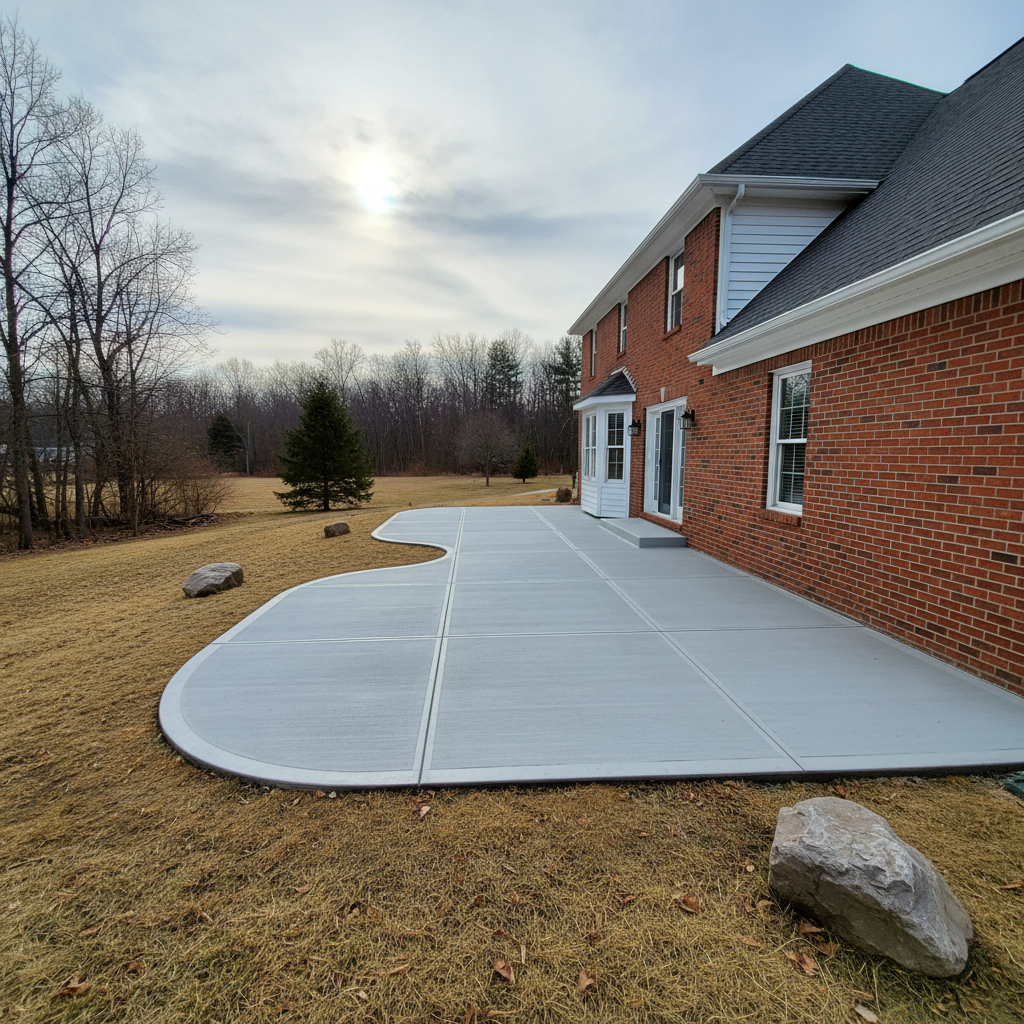
When you are thinking about a new concrete driveway, a new concrete patio, or even a foundation repair here in Muncie, it is easy to just call up and say, "Let us do it!" But hold on a minute. The truth is, timing is important when it comes to concrete, especially with our Indiana weather. You would not plant tomatoes in January. The same goes for concrete. As someone who has been working with concrete around here for years, I can tell you that understanding the seasons and how they affect your concrete investment is important.
When is the Best Time to Pour Concrete in Muncie?
The ideal temperature range for pouring and curing concrete is generally between 50°F and 85°F. That is the good spot where the concrete can hydrate properly. It gains full strength without drying too fast or freezing too slow. In Muncie, that gives us a good window for concrete pouring. It is not as simple as just picking a month for your Muncie concrete project.
- Spring (April-May): This is when everyone wakes up from winter and wants concrete work done. Temperatures are often ideal. They are usually between 50-70°F for your Muncie concrete. But here is the catch: spring rain. Muncie gets a fair amount of precipitation. A heavy downpour on fresh Muncie concrete can wash away the cement paste. This weakens the surface of the Muncie concrete. We are also dealing with thawed ground. This is good for Muncie concrete. You have to watch out for those unexpected late-season frosts that can sneak in overnight. So, if you are thinking spring for your Muncie concrete, get on the schedule early. You must be prepared for potential rain delays for your Muncie concrete pouring.
- Early Summer (June-July): This is prime time for us at Midway Concrete Co. Temperatures are consistently in that 70-85°F range. This is perfect for Muncie concrete curing. We see our highest project volume then because the weather is usually predictable for Muncie concrete installations.
- Late Summer (August-early September): This is still good for Muncie concrete. It can get hot. It can get really hot. Muncie's July and August average highs can hit the mid-80s. When it is over 85°F, Muncie concrete can dry too fast. This leads to shrinkage cracks as well as a weaker surface for your Muncie concrete. If we are pouring in this heat, we take extra precautions. We schedule pours for early mornings as well as using retarders to slow the set. In addition, we make sure the Muncie concrete is wet-cured for the first couple of days.
- Fall (Mid-September-October): This is often the best time for concrete work in Indiana. You get consistent temperatures. These are often in the 50-75°F range. You get stable weather patterns. You usually get less humidity than summer. The ground stays warm enough for proper Muncie concrete curing. It is a good window to get your Muncie concrete project done before the real cold sets in.
- Winter (November-March): This is generally a no-go for standard residential concrete pours in Muncie. Concrete needs to stay above 40°F to cure properly. If it freezes too early, it loses a lot of its strength. Our average January temperatures are often below freezing. You can not pour Muncie concrete on frozen ground either. When it thaws, it will settle and crack your Muncie concrete. Some commercial projects use special heated enclosures as well as special mixes. This rarely makes sense for homeowners due to the added cost as well as the complexity for Muncie concrete work.
Weather Conditions That Really Matter for Muncie Concrete
It is not just the temperature for Muncie concrete. A few other things can affect a good concrete pour in Muncie:
- Rain: We talked about rain. Heavy rain on fresh Muncie concrete is bad news. Light rain after it has started to set might help with Muncie concrete curing. We are always watching the forecast closely for Muncie concrete projects.
- Wind: A strong Muncie breeze can dry out the surface of fresh Muncie concrete too quickly. This leads to plastic shrinkage cracks. We might use windbreaks as well as curing compounds to combat this for Muncie concrete.
- Humidity: Low humidity, especially with wind, can accelerate Muncie concrete drying. High humidity can slow things down a bit. This is not always a bad thing in hot weather for Muncie concrete.
- Frozen Ground: This is a big one for us here in Indiana. Muncie's frost line can be around 30-36 inches deep. You absolutely can not pour Muncie concrete on frozen ground. It needs to be thawed out. This is sometimes done with ground-thawing blankets. This must happen before we even think about pouring Muncie concrete.
Protecting Your Muncie Concrete Investment Year-Round
Once your Muncie concrete is in, you want it to last. Here is how to protect it through Muncie's seasons:
- Sealing is Key: This is probably the most important thing you can do for your Muncie concrete. A good quality sealer protects against moisture as well as chemicals. It also protects against the freeze-thaw cycles we get here. It helps prevent surface damage like scaling as well as spalling for your Muncie concrete. You should reapply sealer every few years. This depends on the product as well as the traffic on your Muncie concrete.
- Mind the Winter Salt: De-icing salts, especially those with ammonium nitrates or sulfates, can be harsh on Muncie concrete. Try to use sand for traction or calcium chloride-based products sparingly. Shovel promptly to reduce ice buildup on your Muncie concrete.
- Watch for Cracks: Even with the best installation, Muncie concrete can develop small cracks. It is just the nature of the material. Do not ignore them! Seal any cracks promptly with a flexible polyurethane sealant. This stops water from getting underneath. This also stops bigger problems from happening. This is especially true when that water freezes and expands in your Muncie concrete.
- Drainage Matters: Muncie has a lot of silty clay loam as well as clay soils. These soils do not drain quickly. They have high shrink-swell potential. Make sure your Muncie concrete has proper drainage away from your home's foundation. Standing water next to Muncie concrete, especially in winter, is a recipe for trouble.
- Keep it Clean: Regular cleaning helps prevent the buildup of dirt as well as oil. It also prevents other substances that can degrade your Muncie concrete over time.
A little planning goes a long way for your Muncie concrete project. When you work with a local contractor like Midway Concrete Co, you are getting someone who understands these local conditions. This includes the clay soil as well as the unpredictable spring rains. We are here to make sure your Muncie concrete project is done right. This way it lasts for years to come.