What's the difference between concrete and cement?
This is probably the most common question I get, and it's a good one because people use the terms interchangeably all the time. But they're not the same thing. Think of it this way: cement is an ingredient, and concrete is the finished product. Cement is a fine powder, usually gray, that acts as the binder. It's what gets mixed with water, sand, and gravel (the aggregates) to create concrete. So, you don't pour a cement driveway; you pour a concrete driveway. Cement is what makes the concrete harden and stick together. Without cement, you'd just have a pile of wet sand and rocks. It's a key distinction, and understanding it helps you understand what you're actually getting when you hire someone like Midway Concrete Co.
How long does new concrete flatwork really last in Indiana?
You want a straight answer, right? A well-installed concrete driveway, patio, or sidewalk in Muncie should last you 20 to 30 years, easily. Maybe even longer if you take good care of it. But that's 'well-installed.' What does that mean? It means proper sub-grade preparation – making sure the ground underneath is stable and compacted. It means using the right mix design for our Indiana climate, which sees everything from freezing winters to scorching summers. It means proper pouring techniques, correct curing, and control joints placed right to manage cracking. If any of those steps are skipped or done poorly, you're looking at a much shorter lifespan. I've seen driveways fail in less than ten years because corners were cut. It's an investment, so you want it done right the first time.
What causes concrete to crack, and can it be prevented?
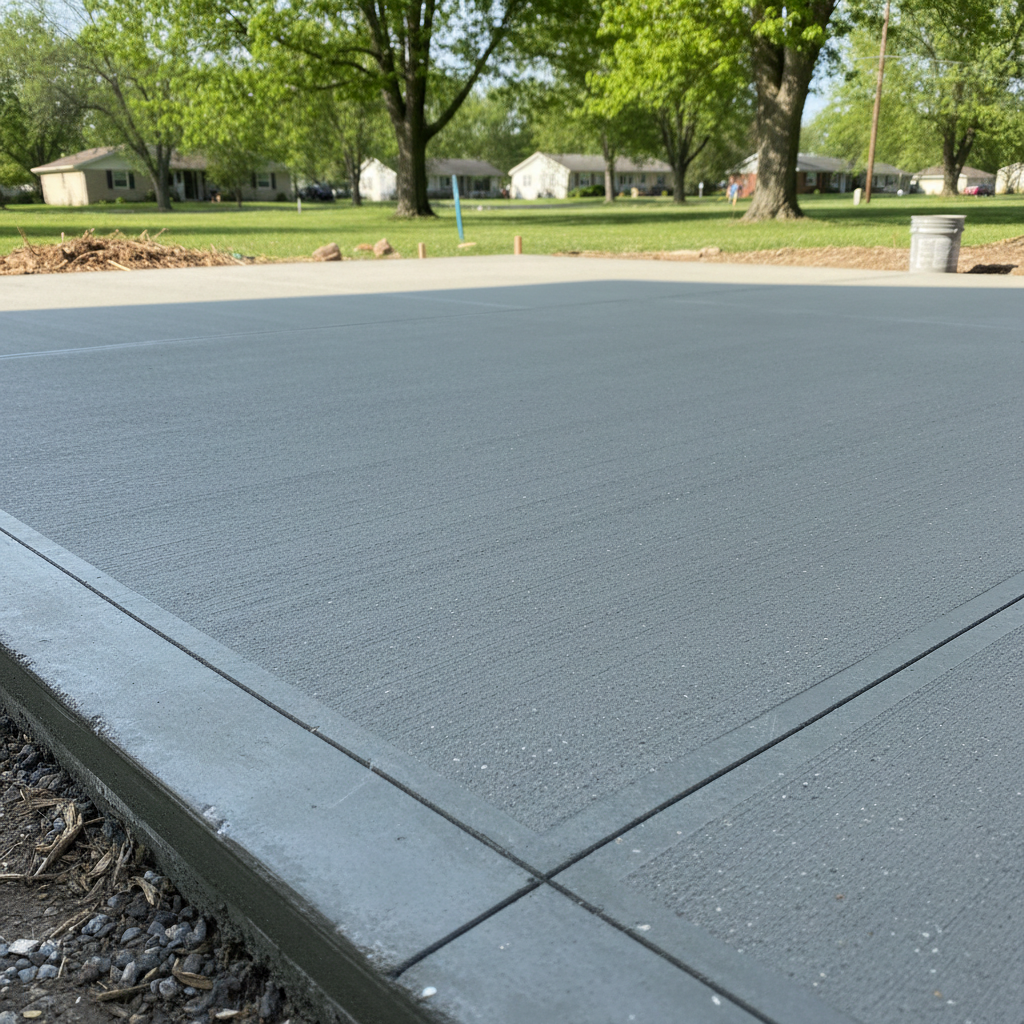
Cracking is a big concern for folks, and for good reason. No one wants a cracked driveway. The truth is, concrete will crack. It's a natural characteristic of the material. It shrinks as it dries and hardens, and that shrinkage creates stress. If that stress isn't relieved, it'll crack wherever it finds the weakest point. That's where control joints come in. We cut those joints into the fresh concrete to create weakened planes, essentially telling the concrete where to crack in a controlled, less noticeable way. Think of it like scoring a piece of glass before you break it. Other causes include poor sub-grade, heavy loads, freeze-thaw cycles (which we get plenty of here in Muncie), and improper curing. You can't prevent all cracks, but proper installation, good control joint placement, and sealing can significantly reduce their number and severity.
Do I really need to seal my concrete, and how often?
Absolutely, you need to seal your concrete, especially here in Muncie. Think of sealer as sunscreen for your concrete, but it also protects against water. Our climate is tough on concrete. We get those brutal winters with freezing and thawing, plus all the salt and de-icers people use. Water seeps into the pores of unsealed concrete. When it freezes, it expands, causing internal pressure that leads to spalling (flaking) and cracking. Sealer creates a barrier that repels water, chemicals, and even oil stains. It also helps protect against UV damage from the sun. I recommend sealing new concrete after it's fully cured – usually 28 days – and then resealing every 2-5 years, depending on the type of sealer and how much traffic the surface gets. It's a small investment that makes a huge difference in longevity.
What's the deal with rebar vs. wire mesh in concrete?
This is about reinforcement, and both rebar (reinforcing bar) and wire mesh serve a similar purpose: to add tensile strength to concrete. Concrete is super strong in compression (when you push down on it), but it's weak in tension (when it's pulled apart). Reinforcement helps it resist those pulling forces. Wire mesh is a grid of steel wires, usually used for lighter-duty applications like sidewalks or thin patios. It's good for controlling shrinkage cracks. Rebar is much thicker steel bars, and it's used for heavier-duty stuff like driveways, foundations, or anything that's going to bear significant weight or stress. It provides much more structural integrity. For most residential flatwork, especially driveways, I prefer using rebar because it offers superior long-term performance against heavy vehicles and our shifting Indiana soils. Sometimes we'll use a combination, or even fiber mesh mixed into the concrete itself for added crack resistance.
How long until I can drive on or walk on new concrete?
Patience is key with new concrete. You're excited to use your new driveway or patio, I get it. For walking, you can usually walk on new concrete after 24-48 hours. It's firm enough to support foot traffic without leaving marks. But driving on it? That's a different story. You need to wait at least 7 days, and ideally 28 days, before driving heavy vehicles on it. Concrete gains most of its strength in the first week, but it continues to cure and gain full strength for about a month. Driving on it too soon can cause permanent damage, like cracking or rutting, especially if the sub-grade isn't perfectly settled. It's always better to err on the side of caution. We'll give you specific instructions when we finish a job, but that 28-day mark is the gold standard for full strength.